

Head Gasket Failure in Tractors – Expert Advice from Emmark UK
A head gasket plays a critical role in every tractor engine. When a head gasket fails, the entire engine is at risk. At Emmark UK, we regularly see tractors suffering from head gasket failure due to heat, wear, or incorrect installation. Understanding how a head gasket works, why a gasket fails, and how to prevent head gasket damage is essential for reliable tractor performance.
What Is a Head Gasket?
A head gasket is a sealing component fitted between the cylinder head and the engine block. The head gasket ensures combustion pressure remains sealed while keeping coolant and oil separated. Without a properly fitted gasket, tractor engines can overheat, lose compression, and suffer internal damage.
Why the Head Gasket Matters
Every tractor engine depends on a correctly installed head gasket. If the gasket fails, coolant can enter the cylinders, oil can mix with coolant, and combustion gases can escape past the head gasket. This seemingly simple component is actually one of the hardest-working seals in your entire engine, dealing with extreme temperatures, pressures, and constant thermal cycling every time you start and stop your tractor.
Common Causes of Head Gasket Failure in Tractors
Understanding what causes head gasket failure can help you avoid expensive repairs and downtime. Here are the most common culprits we see at Emmark UK:
1. Poor Surface Preparation
A head gasket requires perfectly clean and flat surfaces. Any dirt, corrosion, or scratches can prevent the gasket from sealing correctly. Even a high-quality head gasket will fail if surface preparation is poor.
The Reality: This is the most preventable cause of failure, yet it's also one of the most common mistakes we see.
2. Incorrect Torque Settings
If cylinder head bolts are not tightened evenly, the head gasket experiences uneven pressure. This can crush part of the gasket, leading to leaks and early head gasket failure.
The Reality: Following the proper torque sequence isn't optional—it's critical to gasket survival.
3. Engine Overheating
Excessive heat is one of the biggest threats to a head gasket. When a tractor overheats, the gasket material weakens, and the cylinder head may warp, breaking the head gasket seal.
The Reality: A single overheating event can compromise a gasket permanently, even if it doesn't fail immediately.
4. Incorrect Sealant Use
Some mechanics apply sealants where they are not required. This can prevent the head gasket from seating correctly, causing premature gasket failure.
The Reality: Modern head gaskets are designed to seal without additional sealant—adding it often does more harm than good.

Symptoms of a Failing Head Gasket
Recognising head gasket failure symptoms early can save expensive repairs. Your tractor will usually give you warning signs before complete failure occurs—knowing what to look for is half the battle.
Common Signs of a Failing Head Gasket:
- Persistent engine overheating caused by gasket leaks allowing coolant loss or combustion gases entering the cooling system
- White exhaust smoke due to coolant passing the head gasket and burning in the combustion chamber
- Milky oil indicating head gasket contamination where coolant has mixed with engine oil
- Loss of compression from a damaged gasket allowing pressure to escape between cylinders
- Bubbles in the cooling system caused by combustion gases escaping past the head gasket into the coolant
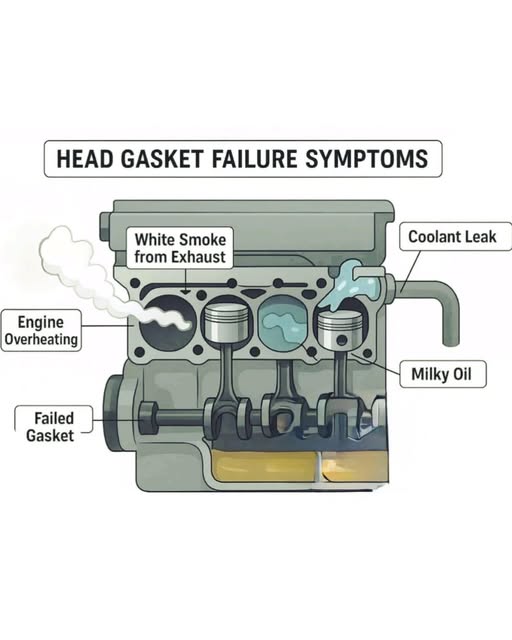
Important: Any of these symptoms indicate a possible head gasket problem and should be addressed immediately. Continuing to run a tractor with a failing head gasket can lead to catastrophic engine damage.
Early Detection Tip
If you notice your tractor's coolant level dropping but can't see any external leaks, a failing head gasket is often the culprit. The coolant is being burned in the combustion chamber and expelled through the exhaust—you just can't see it pooling anywhere.
Preventing Head Gasket Damage
Preventing head gasket failure starts with correct installation and maintenance. At Emmark UK, we've seen that most head gasket problems are entirely preventable with proper procedures and attention to detail.
✓ Fit the Correct Gasket
Always fit the correct head gasket for your specific engine model. Using the wrong gasket—even if it looks similar—can lead to immediate failure.
✓ Clean All Surfaces
Clean all mating surfaces thoroughly before installing the gasket. Use proper scrapers and finishing tools—never shortcuts like wire brushes that can gouge the surface.
✓ Follow Torque Sequences
Follow manufacturer torque sequences precisely to protect the head gasket. This isn't just about the final torque value—the sequence matters just as much.
✓ Maintain the Cooling System
Maintain the cooling system properly to avoid gasket overheating. Regular coolant changes and system checks prevent the heat damage that kills gaskets.
✓ Replace Worn Bolts
Replace worn or stretched bolts when installing a new head gasket. Old bolts may not provide the clamping force needed for proper sealing.
✓ Regular Maintenance
Routine tractor engine maintenance significantly reduces the risk of head gasket issues before they become major problems.
The Bottom Line on Prevention
Most head gasket failures we see at Emmark UK could have been avoided with proper installation procedures and regular maintenance. The few hours spent doing the job right the first time will save you days of downtime and thousands in repair costs down the road.
Head Gasket Replacement: Getting It Right
When it's time to replace a head gasket, cutting corners simply isn't an option. Here's what a proper head gasket replacement involves:
Surface Inspection & Preparation
Before installing any new gasket, the cylinder head and block surfaces must be inspected for warping using a straight edge and feeler gauges. If either surface is warped beyond specification, it must be machined flat—no amount of gasket quality can compensate for warped surfaces.
Proper Installation Procedure
Install the gasket dry (unless the manufacturer specifically requires sealant), ensure all bolt holes align correctly, and follow the torque sequence in multiple stages as specified by the manufacturer. Many modern engines also require angle torquing after the initial torque is applied.
Post-Installation Checks
After installation and initial running, some engines require bolt re-torquing once the engine has reached operating temperature and cooled. Check your engine's specific requirements—skipping this step can lead to premature failure.
Workshop Pro Tip
Always replace the coolant when doing head gasket work. Old coolant that's been contaminated with combustion gases or oil should never go back into a freshly rebuilt engine. It's also the perfect time to flush the cooling system thoroughly.
Why Quality Parts Matter
When it comes to head gaskets, quality isn't negotiable. A head gasket is subjected to extreme conditions: combustion temperatures exceeding 1000°C on one side, coolant at 80-90°C on another, and oil passages running through it. The gasket must seal all of this reliably for thousands of hours of operation.
What Makes a Quality Head Gasket?
- Material Selection: Premium gaskets use multi-layer steel construction with specialized coatings that resist heat and corrosion
- Precision Manufacturing: Every combustion chamber seal, coolant passage, and oil gallery must align perfectly
- Proper Thickness: The gasket must be engineered for the specific compression ratio and head design of your engine
- Testing & Validation: Quality manufacturers test their gaskets under real-world conditions, not just theoretical specifications
A cheap head gasket might save you £50 today, but if it fails in 500 hours instead of 5,000 hours, you'll spend ten times that in labour costs alone to replace it again—not to mention the lost productivity and potential engine damage.
Head Gasket Replacement & Parts from Emmark UK
At Emmark UK, we supply reliable head gasket solutions and agricultural engine parts designed for demanding working conditions. Choosing the correct gasket ensures long-term engine reliability and protects against repeated head gasket failure.
Whether you are carrying out a full engine rebuild or a simple head gasket replacement, using quality components is essential. A durable head gasket helps maintain compression, control engine temperature, and extend engine life.

What We Provide
- Application-Specific Gaskets: We'll help you identify the exact gasket for your engine model
- Complete Gasket Sets: For major overhauls, we supply comprehensive gasket kits
- Technical Support: Our team can advise on installation procedures and troubleshooting
- Quality Assurance: We only stock gaskets from manufacturers we trust
If you need advice on selecting the correct head gasket or gasket set for your tractor, the Emmark UK team is ready to help.
Don't Let Head Gasket Failure Stop Your Work
Head gasket problems can bring your entire operation to a halt, but with proper parts, correct installation, and regular maintenance, most failures are preventable. Whether you're a professional mechanic servicing multiple tractors or a farm owner maintaining your own equipment, having the right parts and knowledge makes all the difference.
Remember: a head gasket replacement isn't just about swapping parts—it's about doing the job right so you don't have to do it again. Take the time to follow proper procedures, use quality components, and your tractor will reward you with years of reliable service.
Need Help with Your Tractor Head Gasket?
We have years of experience helping our customers out with a wide range of issues. We're always happy to help out with some honest advice (and quality parts!).
So, if you'd like to talk to one of our experts, give us a call on 0113 2552344, or email us at [email protected]. It would be great to hear from you.